Tag: business

  • Building Discipline in QSR Supply Chain & COGS

    Building Discipline in QSR Supply Chain & COGS

    In QSR, margins are not lost in big strategic mistakes. They usually disappear quietly, somewhere between a supplier invoice, a delivery note and what actually gets used in a restaurant.

    For a long time, we treated COGS as a number you calculate after the fact. Food cost reports, variance checks, monthly reviews. Useful, but always backward-looking. The problem with that approach is simple: by the time you see the number, the money is already gone.

    What we needed at Koykan was not a better report. We needed control over the entire flow that creates COGS in the first place.

    From Cost Tracking to Supply Chain Thinking

    As we grew across countries and store formats, it became obvious that COGS is not just about prices. It is about structure. Who buys. From whom. Under which conditions. How goods move. When data becomes available. And how quickly inconsistencies surface.

    We started treating supply chain management as a core operating system, not a support function. That meant designing a process where procurement, inventory, finance and store operations all speak the same language.

    At the center of that system sits Odoo as our ERP. Not as a passive accounting tool, but as the place where commercial reality is enforced. What can be ordered, at what price, from which supplier and under which rules.

    kShop as a Control Layer

    On top of Odoo, we built kShop controlled procurement layer (our eCommerce solution as part of the Odoo environment). From the store perspective, it looks simple: a digital cart, clear prices, clear confirmation steps. Behind the scenes, it is anything but simple.

    Every order becomes a single commercial truth. A sales order that connects customer intent, supplier RFQs, pricing logic, margins and delivery expectations. Nothing moves forward without confirmation. Nothing gets paid without matching data.

    This is deliberate friction. In QSR, speed without structure is expensive. kShop slows things down just enough to prevent errors, leakage and silent margin erosion.

    Data Has to Move Automatically

    Control only works if data flows without human interpretation. That is why the system is connected to our POS environment (Remaris) through a data layer that synchronizes goods receipts and consumption data.

    When goods are received in a store, that confirmation becomes data. That data flows back into Odoo. From there, it flows into our analytics layer built on top of Tableau BI platform. The goal is simple: what is delivered, what is received and what is sold should reconcile without manual intervention.

    Where it does not reconcile, we want to know quickly. Not at month-end, but while correction is still possible.

    Inventory Is a Financial Topic

    One of the more uncomfortable lessons is that inventory is not an operational detail. It is a financial risk.

    Over-ordering hides problems. Under-ordering creates stress and bad decisions. Missing goods distort margins. Small consumables quietly add up.

    For that reason, not everything is tracked the same way. High-value items flow through strict inventory logic. Packaging and consumables are tracked at the financial model level, with consumption patterns monitored through dashboards rather than warehouse counts.

    This is not about perfection. It is about proportional control.

    Why This Matters

    COGS discipline is not about saving cents. It is about building a business that behaves predictably at scale.

    If you want to open the next 10 or 50 locations, you cannot rely on heroics or local fixes. You need systems that work when people are tired, busy or replaced. You need a supply chain that protects margins by default.

    This setup took time. It took iteration. And it is still evolving. But it changed how we think about COGS.

    Not as a number to explain after the fact, but as a consequence of decisions made upstream.

    That shift made a bigger difference than any single supplier negotiation ever could.

    A Note of Thanks

    What sits behind this system is not a short-term learning burst or a single implementation project. It is the result of almost two years of continuous learning, iteration and sometimes uncomfortable conversations. Step by step, the ideas became processes and the processes became something tangible that now runs the business.

    That would not have been possible without partners and individuals who stepped in at key moments, challenged assumptions, helped translate ideas into systems and stayed patient while we learned by doing.

    These are the people and partners I would like to personally thank:

    • Our IT Managed ProServe partner, we:innov8, and their IT guru, Lionel Sacon, for managing the entire process and pulling all the stakeholders together.
    • Koykan COO, Co-Founder and my partner Domagoj Klarić — for his know-how and thoughtful devil’s advocate conversations 🙂
    • Our Odoo partner, Ecodica, and Ivan Vađić, who led the team that helped us understand the mechanics of the broader supply chain logistics — and, of course, implemented the entire solution in a fraction of the time. Thank you!
    • Tibor Žigmond for his constant support and partnership in the QSR arena. 
    • And a special thanks to Troy Weeks for his early advice on where we needed to be, and to Pawel Szczepaniak for his introduction to the QSR software landscape and what’s possible – thanks a mill!

    And to everyone who contributed along the way but is not mentioned by name here — thank you as well. This system carries more fingerprints than it shows on the surface.

  • Why I Write Semiannual Letters to Koykan Shareholders

    Why I Write Semiannual Letters to Koykan Shareholders

    A while ago, I made a conscious decision to start writing semiannual letters to all Koykan shareholders and investors.

    Not updates. Not announcements.
    Letters.

    At first glance, this may sound like a formal obligation. In reality, it came from a much more basic realization: if a company is not 100% owned by its CEO, then shareholders are the people the CEO ultimately answers to. And yet, meaningful communication with them is one of the most neglected parts of the job.

    Most shareholders are not involved in the daily business. They don’t sit in operational meetings. They don’t feel the pressure of execution week by week. But they do want to understand how their investment is progressing and whether the company is being run with care, discipline and a long-term mindset.

    What counts in the long run is not size or headline growth. It is the increase in per-share value. And that responsibility sits squarely with management.

    Writing Is as Much for Me as It Is for Them

    PE is usually less focused on stories and more focused on how a Over time, I realized that these letters are not only written for shareholders. They are also written for me.

    Writing a semiannual letter usually takes almost a full day. It is a retrospective exercise where I force myself to slow down and look back at what we actually did in the previous period and where we are heading next. Not where we hoped to be. Not where we talked about being. But where we truly are.

    An important part of every letter is data and numbers. Not because numbers tell the whole story but because they create an unavoidable level of transparency. Numbers make progress measurable. They also make mistakes visible. And that is healthy.

    This process helps me separate signal from noise. It sharpens my thinking and often clarifies decisions that felt messy before they were written down.

    Talking About Risk Without Panic

    One of the most important elements of every semiannual letter is risk.

    Companies compete in real markets. No CEO and no management team can look at their business honestly and conclude that there are no risks ahead. Ignoring them does not make them disappear.

    Writing openly about risks is not about creating fear. It is about acknowledging complexity. It is about showing that building a company is not a straight line and that many things can go wrong even when intentions and effort are strong.

    Clear articulation of risks creates trust. It also helps set realistic expectations about what it takes to build something durable.

    Structure Follows the Business

    Each letter looks different. And that is intentional.

    Writing about an early-stage business is not the same as writing about expansion challenges. The questions change. As Einstein once said, questions are the same, but sometimes the answers change. The risks change. The focus shifts. The structure of the letter needs to follow the reality of the business at that moment.

    In Koykan’s case, there is also an additional layer of complexity. We operate in the QSR space, which has its own dynamics, but our shareholder base is not made up only of people from that industry. The language needs to be specific enough to reflect operational reality and simple enough to be understood by those who are not in the business every day.

    That balance is not easy. But it is necessary.

    Timing Matters More Than Frequency

    I cannot write these letters unless I am mentally ready.

    There are periods when writing gets delayed for weeks. Sometimes because the workload is simply too heavy. Sometimes because there are unresolved risks or open questions that need to be addressed first. Writing before that clarity exists would not be honest.

    When the moment comes, I usually take a weekend. Family time suffers a bit. I retreat with good coffee or green tea and write everything I believe matters. Not what sounds good. Not what reassures. But what reflects how I truly see the business at that moment.

    Why Share These Letters Publicly

    At some point, I decided not to keep these letters only for Koykan shareholders and investors.

    The reason is simple: I believe the role of a CEO is inherently public. A CEO is accountable not only to investors but also shapes the public image of the company they lead. Internal culture spills into brand. Values spill into behavior. Transparency builds credibility over time.

    Just as in private life, business benefits from clear communication, sustainability in decision-making and a sense of humanity. I believe it is healthy to share how decisions are made, what pressures exist and what trade-offs are being considered.

    That is why these letters now live not only in inboxes but also here on Koykan’s Investor Relations web page. Not as a finished story, but as an ongoing one.
    If you feel like going a bit deeper, my latest letter is available here.

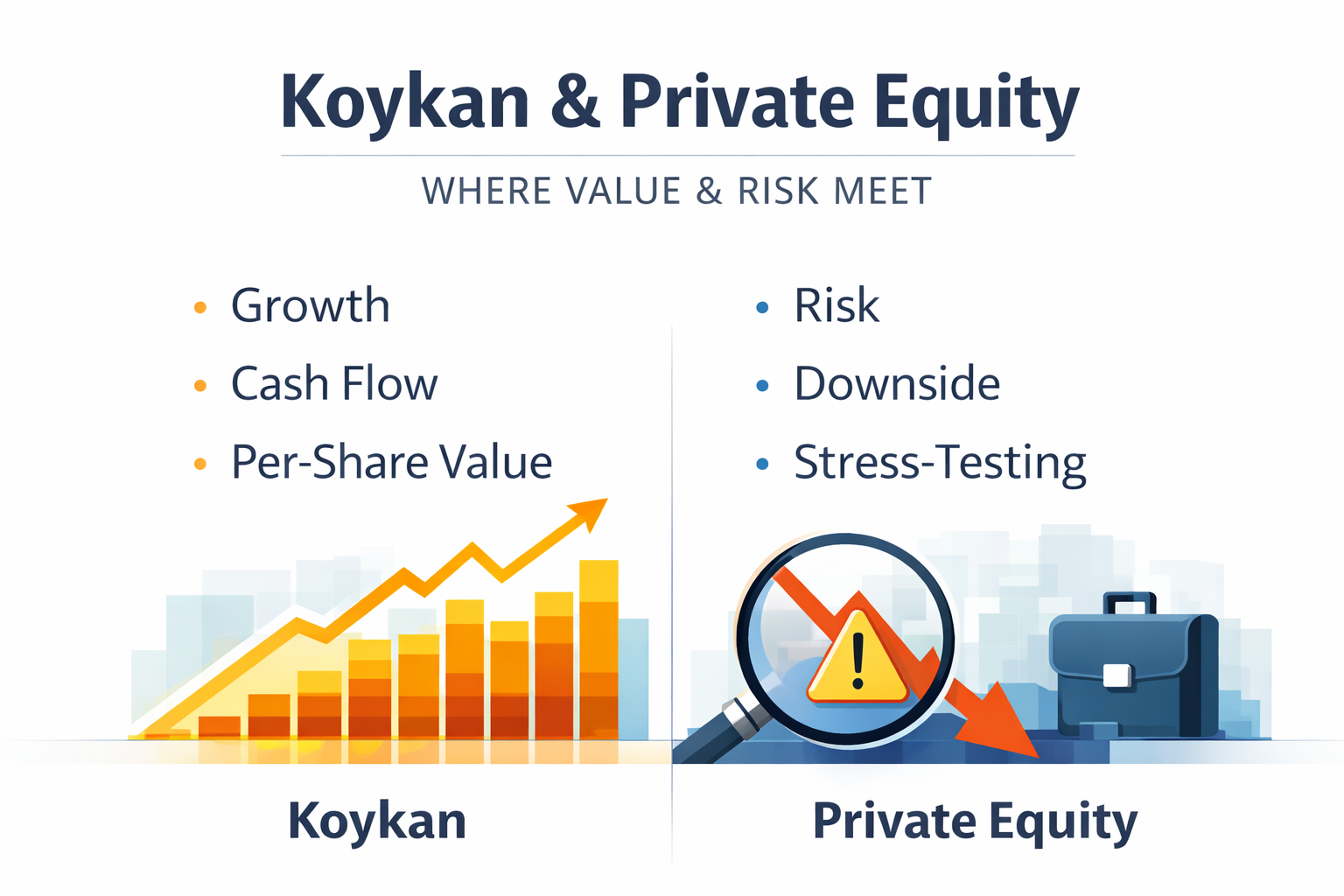
  • Koykan & Private Equity: Why PE Cares Less About Stories and More About How Businesses Behave

    Koykan & Private Equity: Why PE Cares Less About Stories and More About How Businesses Behave

    As we prepare for deeper conversations across different types of capital providers, including PEs, RBF investors, family offices, VCs, HNWIs, banks and other institutional investors, I keep coming back to one question:

    What do PE funds actually seem to look for when they invest and why do some founder-led businesses appear to fit that way of thinking better than others?

    I’m writing this primarily for business owners. Not as theory and definitely not as a pitch deck guide. More as a summary of what my own research, conversations and reading have shown me so far and how that thinking is influencing how we look at Koykan.

    If you’ve been following my recent posts on 365weeks.com, you’ll probably recognize some recurring themes: running operations well, allocating capital carefully and trying to build businesses that can operate consistently without constant firefighting. From what I’ve seen, this also tends to be where PE conversations usually begin.

    What PE Funds Appear to Be Buying

    PE is usually less focused on stories and more focused on how a business behaves in practice.

    In simple terms, they seem to look for businesses that:

    • Generate relatively predictable cash
    • Can reinvest that cash into repeatable growth
    • Are able to handle downside scenarios without breaking

    Most founders naturally talk about upside first. From what I’ve seen, PE tends to start by testing the downside.

    The early questions often sound like:

    • What could realistically break this business?
    • What happens if capital markets slow down or shut off?
    • Does growth depend on flawless execution or constant new funding?

    That’s probably why PE discussions often move quickly toward quality of earnings, controls and unit economics well before anyone gets excited about expansion plans.

    The PE Return Equation (As I Understand It)

    Two concepts seem to dominate PE thinking:

    • MOIC — how many times the invested capital comes back
    • IRR — how quickly that return happens

    From what I’ve learned, a deal does not need extreme multiples to be attractive if cash flows are stable and reinvestment is disciplined. What PE seems to be more cautious about are businesses that only work if they take on a lot of debt, assume they can be valued much higher in the future or need constant injections of new equity to keep growing.

    Those approaches can work in strong markets but tend to struggle when conditions change.

    Why the Koykan Model Seems to Align

    Koykan is not a single-asset story. It’s a QSR business built around repeatable store-level economics.

    Based on our own analysis, three characteristics matter most:

    1. Repeatable unit economics
    Each store follows the same CAPEX logic build process and ramp-up curve. This makes forecasting more realistic and allows for fast course correction at the unit level.

    2. The potential to self-fund growth over time
    At scale, the existing base should be able to generate enough cash to support further expansion. From what I’ve seen, this materially lowers risk and tends to resonate well with long-term investors.

    3. Flexibility in how growth is financed
    Rather than relying on a single source of capital, the business can grow in different ways. That can include opening corporate stores, working with franchise partners, co-investing with others, using instruments like bonds or RBF and eventually adding senior debt.

    The point is not to use all of these at the same time. It is to have several options available and to choose the right one depending on the situation, the level of risk and the stage of the business.

    When these elements are in place, PE does not seem to require an oversized story to get comfortable with expected returns.

    How We Currently Think About Deal Structure

    Before looking deeper into PE, I used to think a PE deal was mostly about one thing: they wire money and growth accelerates.

    What I’ve learned is that the structure often matters just as much as the amount invested. From what I understand, PE prefers equity to be used when risk is highest and then gradually complemented or replaced with cheaper forms of capital as the business proves itself.

    The principles we are currently working with are:

    • Equity discipline — treating equity as a scarce resource rather than default fuel
    • Clear capital stack rules — understanding who sits where, how cash flows and how refinancing risk is handled
    • Downside protection — thinking through what happens if things go wrong, such as lower sales, higher rent costs, staff shortages or slower execution and making sure the business can still operate.
    • Decision-grade reporting — consistent store-level P&Ls and clear KPI definitions

    From what I’ve seen, many deals struggle not because the underlying business is weak but because the information available is not solid enough to support decisions.

    In practical terms, this is also what we have been focusing on inside Koykan. Throughout 2025 we have been putting the foundations in place to run the business with a long-term mindset: cleaner store-level reporting, clearer capital allocation rules and a stronger focus on cash generation at the unit level. In 2026 we are continuing that work more intensively, building systems and habits that allow us to grow without losing control of returns. The goal is simple and very deliberate: to manage the business in a way where what matters in the long run is the increase in per-share value rather than headline growth or size, and where cash flow rather than reported earnings drives how we think about long-term value.

    At least from where I’m standing today, PE logic appears to reflect a simple principle:

    Run operations efficiently. Deploy capital rationally.


    This reflects my current understanding and thinking as we prepare for these conversations. I fully expect this view to evolve as we learn more and test these assumptions in practice.

  • Building the Communication Engine for 350+ Investors

    Building the Communication Engine for 350+ Investors

    Koykan today has more than 350 shareholders and investors. That number still amazes me. These are people who opened their doors, trusted me and my team, and decided to back a vision we are building day by day.
    That level of trust creates responsibility — and with it, one essential question:
    How do I keep every single investor informed in a structured, consistent and transparent way?

    Not just with public updates, but with deeper, confidential insights into the business — financial analyses, strategic papers, long-term plans and the decisions behind them.

    So I needed to build a communication system with two parallel lanes:

    1. A private, secure 1→N channel for shareholder updates
      – confidential information
      – financial results
      – strategic decisions
      – internal reports
    2. A public weekly rhythm
      – reflections
      – what we’re building
      – what we’re learning
      – personal notes from the CEO seat
      – shared across LinkedIn and the blog

    A private engine + a public engine.
    Simple to describe, very painful to implement.

    Executive Summary (for the impatient)

    If you strip the book down to its most essential point, it fits into two sentences.
    If you don’t care about the details, here’s the short version:

    • it took ~20 hours to set everything up end-to-end
    • it took a surprising amount of ChatGPT conversations
    • and it took another 8 hours to structure investor data, clean emails, create groups, verify contacts and send the first official messages

    I now have both platforms running seamlessly — one for private bulk emails and one for weekly public communication.
    All 350+ investors are finally inside one coordinated communication ecosystem.

    If you want the longer story, read on.

    How the Platform Was Built

    1. Setting up WordPress (365weeks.com)

    I have never personally installed or administered WordPress before.
    So step one was:

    • launch the site
    • choose a design direction
    • configure branding, colors, formats, responsive layouts
    • build a clean blog structure
    • design post templates

    This became the foundation for all weekly communication.


    2. Designing the blog experience

    Once WordPress was live, I had to shape the actual experience:

    • typography
    • spacing
    • templates
    • content blocks
    • newsletter sections
    • visuals and interaction elements

    A blog should be simple on the outside and a complete mess on the inside — and that’s exactly how mine behaved while I was working on it.


    3. Setting up Brevo – the newsletter engine

    Brevo became the platform for sending:

    • public newsletters
    • blog summaries
    • weekly reflections
    • long-form updates

    I configured sender domains, templates, email verification, formatting, segmentation and deliverability.

    This alone took hours.


    4. Configuring the RSS feed automation

    Every time I publish a blog post, Brevo now reads my RSS feed and automatically prepares a weekly newsletter summarizing everything I wrote.

    One or two posts a week → one automated, clean, weekly update.

    Zero manual work.

    Zero manual work.


    5. Setting up Odoo Email Marketing (for confidential communication)

    Next, I needed a private mass-email engine for shareholders — something not public.

    Inside our ERP (Odoo), I configured (thank you my IT guru for your precious help! – you will know who you are 🙂

    • Email Marketing module
    • mailing lists
    • investor groups
    • secure sender identity
    • templates for confidential content
    • attachments for financial documents

    This became the channel for sensitive updates.


    6. Cleaning and organizing contacts (Excel hell)

    This part was… painful.

    I pulled together:

    • all investor contacts
    • emails
    • groups
    • roles
    • categories
    • mailing lists

    Then cleaned everything in Excel and imported it properly into both:

    • Brevo
    • Odoo Email Marketing

    This was the last missing piece.


    7. Writing the first messages and pressing send

    Once everything was ready:

    • I wrote the first investor emails
    • prepared confidential attachments
    • wrote the first blog post
    • published it
    • triggered both systems

    And suddenly…

    350+ investors received their first coordinated communication from me.

    Final Thoughts

    This was a bigger project than I expected.
    But it was worth every hour — because investor communication is not a checkbox. It is a discipline.

    If someone gives you their trust and their capital, the least you can do is keep them informed, included and respected.

    Now I finally have the infrastructure to do that — both privately and publicly.

    Huh!

  • The Rare Ones Who Push the Business Forward

    The Rare Ones Who Push the Business Forward

    Anyone who has ever hired people knows this challenge:
    we never truly know who we’re bringing into the team.

    Once someone joins, we usually discover two types of people:

    1) Those who work.
    2) Those who push the business forward.

    Both groups matter — the first forms the connective tissue of the company.
    But the second group… they are the true engine.
    They move the business. They change its trajectory. They create momentum.

    The problem?
    Most people think they belong to group two.
    Very few actually do.

    Because pushing the business forward requires something incredibly rare:
    deep analytical thinking.

    And analytical thinking is hard. Painfully hard.

    It means generating initial ideas, then putting them through internal stress-tests:
    What’s good? What’s weak? What doesn’t make sense?
    Then comes feasibility:
    Can the team execute this? Do we have the skills, the knowledge, the budget?

    If the idea survives all that — only then does the real work begin.

    Writing the idea down clearly enough for the rest of the company to understand it.
    Building a team around it.
    Driving the project, challenging your own assumptions,
    challenging the team, maintaining quality, energy and speed.

    People who can do this — the true “pushers” — know exactly what I’m talking about.
    It’s demanding. Draining. And rare.

    And this is where the CEO’s biggest challenge begins:

    How do you surround yourself with as many of these people as possible?

    The ones who take ownership.
    The ones who roll up their sleeves.
    The ones who think, question, analyze, improve and push.
    Not because someone told them to — but because they can’t imagine working any other way.

    These are the people who deserve ESOP.
    These are the people who deserve the manager’s time, trust and attention.

    At Koykan, we’re trying to build a team of such pushers.
    It’s not easy. For two reasons:

    a) There simply aren’t many of them.
    b) Most people believe they have these qualities — and they don’t.
    Which means time, reshuffling, tough conversations, and yes, letting some people go or moving them into roles where they contribute as support rather than as drivers.

    Do you agree that these people are rare?
    Is analytical thinking simply one of those abilities the universe distributed in very limited quantities?

  • Running a Business the Outsider Way

    Running a Business the Outsider Way

    Over the past year, I’ve gone through dozens of books on management, scaling and finance. Most of them boil down to the same thing: broad statements, generic advice, plenty of theory — very few practical tools.
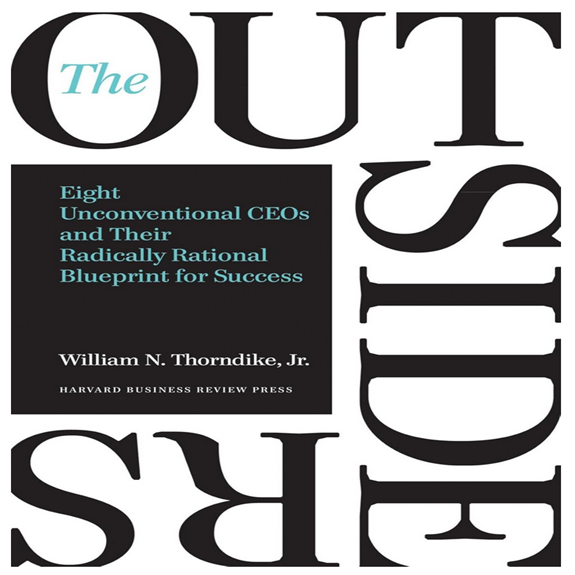
    And then I picked up The Outsiders.

    The book profiles eight unconventional CEOs who — without grand speeches, flashy strategies or obsession with “big numbers” — created perhaps the most rational blueprint for long-term value creation. And although each of them ran a completely different type of business, they all shared one discipline: operational efficiency and smart capital allocation.

    Honestly, very few books have changed the way I view the CEO role as much as this one.

    What a CEO Actually Needs to Do

    If you strip the book down to its most essential point, it fits into two sentences.
    A CEO who wants to create long-term value must do two things exceptionally well:

    1. Run the operations efficiently.
    2. Allocate capital rationally — like an investor, not an administrator.

    That’s it. No philosophy. No overcomplication.
    Everything comes down to this.

    And in that simplicity lies its weight — because very few CEOs actually do it.

    Capital as a Tool for Decisions, Not Decoration

    Every euro the company generates must find its best possible use:

    • investing into existing operations
    • paying down debt
    • paying dividends
    • repurchasing shares
    • acquiring other businesses

    But the point is not the list itself.
    The point is discipline.

    In the long run, what matters the most is not the size of the company, the number of locations, the scale of the brand or the PR value. What really matters is one thing:
    the growth of per-share value.
    And that comes mostly from:
    cash flow.

    Reported earnings can lie. Cash flow can’t.

    The Operational Side of the Outsider Mentality

    The second major lesson is operational — and just as direct.
    The best organizations are decentralized.
    They give people space, autonomy and responsibility.
    They don’t suffocate initiative, don’t block creativity and don’t turn talented people into administrative robots.

    And at the same time, the book warns about something else:
    too many outside advisers can be dangerous.
    Not because they’re bad — but because they take up mental space and often lack true context.
    The quality of decisions is heavily dependent on the quality of internal thinking.

    How This Reflects on Koykan

    I’m not writing this as theory.
    This has been on my mind for months in a very practical way.
    Over the past few quarters, I’ve been deliberately steering Koykan more and more in this direction.

    Operational efficiency as the foundation

    Simplifying, decentralizing, giving clear ownership.
    Less unnecessary communication, more autonomy in decision-making.
    Less control, more responsibility.
    Is it hard to stay consistent and disciplined in this? Yes, it is.

    Capital allocation as the CEO’s most important job

    In QSR it’s easy to fall into the trap of “open another location.”
    It looks like growth. But growth isn’t always value.

    That’s why in recent quarters my team and I:

    • spend far more time analyzing store-level returns
    • focus on how generated cash is reinvested
    • think in terms of long-term flywheel, not short-term wins
    • Every new investment needs a rational reason — not an emotional “let’s keep expanding” moment

    Separating growth from value creation

    Koykan can become twice as big.
    But if that growth doesn’t translate into proportional or greater value — then it’s just an illusion.

    The Outsider mentality taught me that sometimes the best investment is doing nothing new; just managing the existing better.
    We’ve stopped building until the end of Q1 next year to focus on what we already have — laying the groundwork for sustainable future growth.

    Why the Book Resonated So Much

    Maybe because it reminded me that a CEO is not a chief operator.
    Not a chief salesperson.
    Not a chief firefighter.
    Not the chief “open more stores.”

    A CEO is primarily:
    an allocator of resources and a guardian of long-term value.

    And that perspective — that calm, rational, long-term lens — helped me personally regain focus at a moment when everyone was pulling for speed, expansion and “more.”

    Uninterrupted Thinking

    I’m not sure whether The Outsiders will be the right book for everyone.
    But for me, it was one of those inflection points that forces you to slow down, think and reset your own role.

    And I think, long-term, that’s the best thing a CEO can do — give themselves the luxury of uninterrupted thinking.
    Everything else flows from that.